Workplace
From Demo Floor to Decision Room
A closer look at how Las Vegas brings product launches, client meetings, and post-event momentum into one connected workday.
By Aref Adibi | Broker Associate | Las Vegas Commercial Realty, Inc.
Somewhere on a Las Vegas show floor right now, a product is being unveiled for the first time — and two floors up, in a much quieter room, someone is deciding whether to buy it. That’s the part of Las Vegas’s convention economy that doesn’t make the highlight reel. The demos get the cameras. The decision rooms are where the year actually gets made.
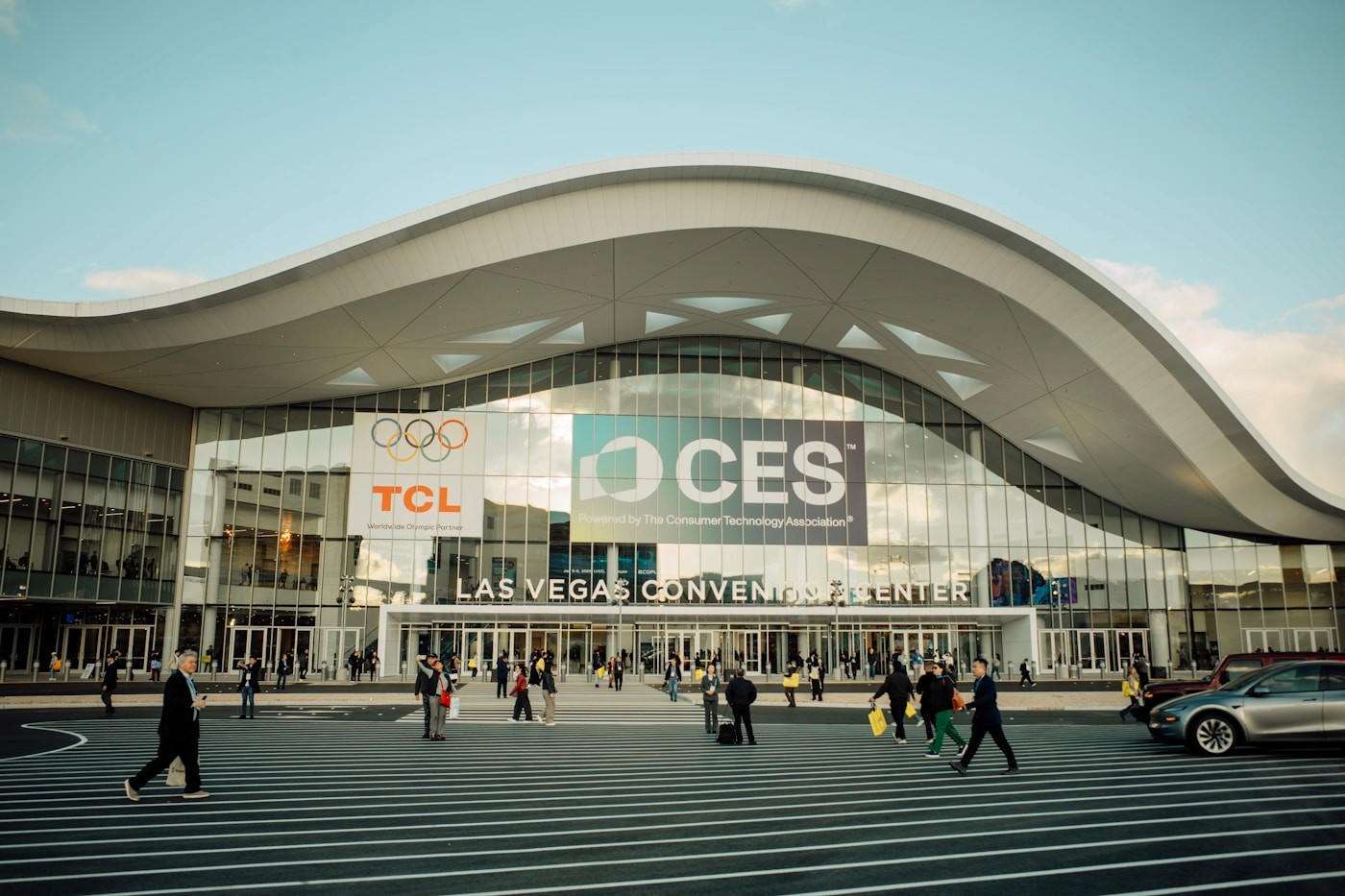
The Floor: Where Launches Happen at Scale
CES 2026 made the case for this better than any single event could. Running January 6–9, the first major show inside the newly renovated, $600 million Las Vegas Convention Center campus, CES brought together more than 4,100 exhibitors and roughly 130,000 attendees from over 150 countries across more than 2.5 million net square feet of exhibit space.
The launches themselves spanned nearly every industry. Nvidia’s Jensen Huang and AMD’s Lisa Su both delivered keynotes on the next wave of AI infrastructure, while Lenovo’s Yuanqing Yang used the Sphere itself as a stage for the company’s Tech World Conference. Siemens used its keynote to unveil Digital Twin Composer, new industrial-metaverse software, with PepsiCo’s global chief strategy officer on stage describing how the company is already using it to simulate upgrades across its U.S. facilities. Caterpillar delivered a keynote of its own, and Samsung skipped the show floor entirely for a standalone exhibition space at the Wynn, where its “First Look” event previewed new AI-driven displays and appliances ahead of the main event. Consumer electronics mainstays LG, Sony, TCL, Hisense, and Panasonic filled out the halls alongside chipmakers Intel and Qualcomm, while Sony Honda Mobility used the week to share new details on its Afeela electric vehicle.

In the newly built West Hall, Hyundai anchored a mobility stage shared with Nvidia, Valeo, and Zoox, alongside John Deere, Amazon, Doosan, BMW, Caterpillar, Brunswick, Oshkosh, Geely, and Qualcomm — companies whose core business has little to do with consumer electronics, but everything to do with where autonomy and connected systems are headed next. Ikea skipped the traditional booth altogether, opting for a private suite at The Venetian to preview its next generation of smart-home products. On the robotics side, Richtech Robotics exhibited alongside Booster Robotics, Doosan, Tombot, and WIRobotics as “physical AI” became one of the show’s defining themes — and Universal Robots and Robotiq unveiled a new robotic palletizing system in collaboration with Siemens, a launch built specifically for the buyers walking the Advanced Manufacturing Showcase, not the general public. Media and entertainment had their own contingent, with Amazon Prime Video, Netflix, Meta, NBCUniversal, Roku, SiriusXM, and Snap all exhibiting alongside Marriott International and Uber.
That’s the defining feature of a floor like CES: it’s not one demo, it’s thousands, running in parallel, each aimed at a different decision-maker walking a different aisle.
The Room: Where the Floor Turns Into a Deal
None of that matters if it stays on the floor. The real work of a show week happens in the rooms attached to it — the follow-up meeting booked from a booth conversation, the supplier evaluation that starts with a five-minute demo and ends with a signed term sheet weeks later.
This is where Las Vegas’s advantage becomes structural rather than just cultural. The city doesn’t just host the demo — it’s built the meeting infrastructure to catch what comes out of it. The Las Vegas Convention Center alone carries 225 meeting rooms spanning more than 390,000 square feet, built specifically to sit adjacent to exhibit space rather than across town from it. A company that spots a fit on the show floor on Tuesday morning can be in a private decision-room conversation with that same vendor by Tuesday afternoon, without either side leaving the building.
It’s Not Just Tech
CES gets the headlines, but the pattern repeats across industries most people don’t associate with Las Vegas at all. World of Concrete, the construction industry’s largest annual event, returns to the Las Vegas Convention Center January 20–22, 2026, bringing over 1,000 exhibitors and tens of thousands of contractors, engineers, and equipment manufacturers together across more than 700,000 square feet of indoor and outdoor exhibit space — plus a live outdoor demo lot where equipment actually runs, not just sits on display. SEMA brings the automotive aftermarket industry through the same renovated campus each November. InfoComm draws the audiovisual and enterprise-IT world every June. Each show follows the same underlying shape: a floor built for demonstration, and a room built for the decision that follows it.

Why the Distance Matters
Compress the distance between a demo and a decision, and something changes about how business actually gets done. A vendor doesn’t have to hope a lead remembers the pitch three weeks later — they can move the conversation into a room the same afternoon, while the demo is still fresh and the buyer’s team is still in town. A buyer doesn’t have to coordinate a second trip to properly evaluate a vendor — the follow-up meeting is a short walk from where the interest started.
That compressed distance is also where post-event momentum tends to either compound or evaporate. Companies that treat a Las Vegas show week as a single presentation are leaving the second half of the opportunity on the table. Companies that build in room time — for the follow-up conversation, the deeper technical dive, the negotiation that doesn’t belong on a public floor — are the ones who leave the city with signed next steps instead of just business cards.
The Takeaway for Anyone Planning a Show Week
The lesson from watching this play out year after year is simple: the floor gets a company noticed, but the room is where the year gets decided. Las Vegas has built its entire convention infrastructure — from the LVCC’s renovated halls to the meeting space woven throughout it — around making sure those two moments stay close together. For any company treating its next Las Vegas trip as just a booth and a booth number, that’s the opportunity being left on the table.
Planning a show-week presence and need decision-room space nearby? Reach out to our team — we can help you find it.

Book the Meeting Room
Book the Conference Room